|
Wind Assistance for ships and boats - back to basics. Types of wind assistance. There are three main types of wind assistance for boats and ships: 1. Sidewind
Assist. All of the
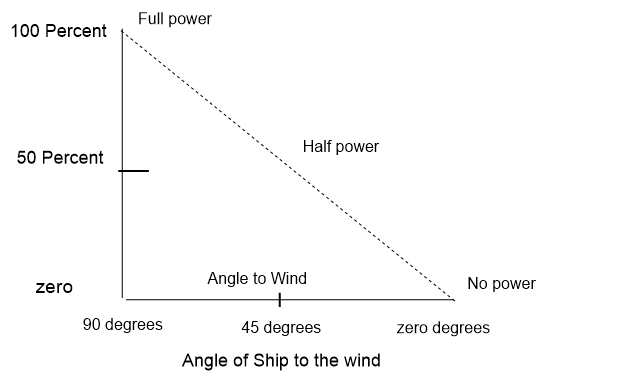
systems implemented so far are Sidewind Assist and Downwind assist. Traditional sailing methods use sidewind assist as do also the wind assist systems being now introduced on larger ships, such as wingsails, Flettner rotors, and "suction towers" These work best by providing thrust from the wind when the wind is approximately 90 degrees to the direction of travel. If the desired direction of travel of the ship changes from the optimum 90 degrees, the thrust effectiveness diminishes proportionally. As in the graph below which shows the loss of thrust when the vessel steers closer to the direction the wind is coming from. 90 degrees to the intended direction of the ship provides the maximum thrust and this diminishes as the heading goes more towards the wind and finally is reduced to nothing when the vessel is head to wind. As shown on the graph below
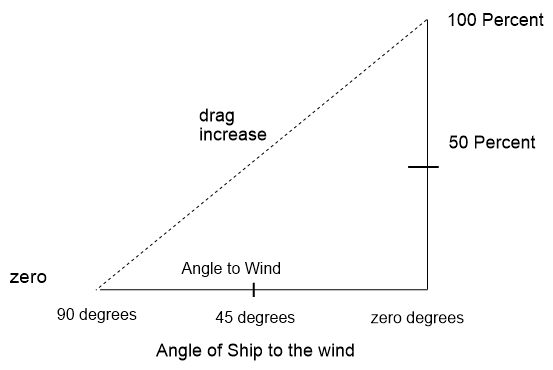
Additionally in the same case, the air drag on the vessel changes from 0 when at 90 degrees to the wind direction, to maximum when the ship is head to wind. As shown in this graph.
This is why normal sailing craft cannot sail closer to the wind than a certain amount because not only does the thrust decrease but the drag increases and there comes a point when the drag exceeds the thrust and the boat cannot go further. Rotary Sail (not rotor sail*) equipped vessels using headwind assist add another wind direction where the wind can be used to drive the ship - when the wind comes from directly ahead. Thus adding another dimension to the previous systems which can only use sidewinds - in this way there will be no "unfavourable winds" for the ship any more. Footnote -
"Suction Towers" refers to the sailing system invented by Jacques
Cousteau
|
| Windthrusters Home | Sailwings Home | Wind Assist for ships |
| Contact |
Amateur Yacht Research Society
Peter Worsley 2023